Back to Top
Showing posts with label Urology. Show all posts

Enlarged prostate | Benign Prostatic Hyperplasia (BPH) | Know your disease

Benign Prostatic Hyperplasia

Benign Prostatic Hyperplasia is commonly known as BPH. BPH is a common condition that affects men as they age, and can cause a range of symptoms that can affect their quality of life. In this article, we will be discussing the causes, symptoms, diagnosis, and treatment options for BPH.


What is BPH?

BPH is a non-cancerous enlargement of the prostate gland, which is located below the bladder and surrounds the urethra. As the prostate gland grows, it can squeeze the urethra, causing a range of urinary symptoms.
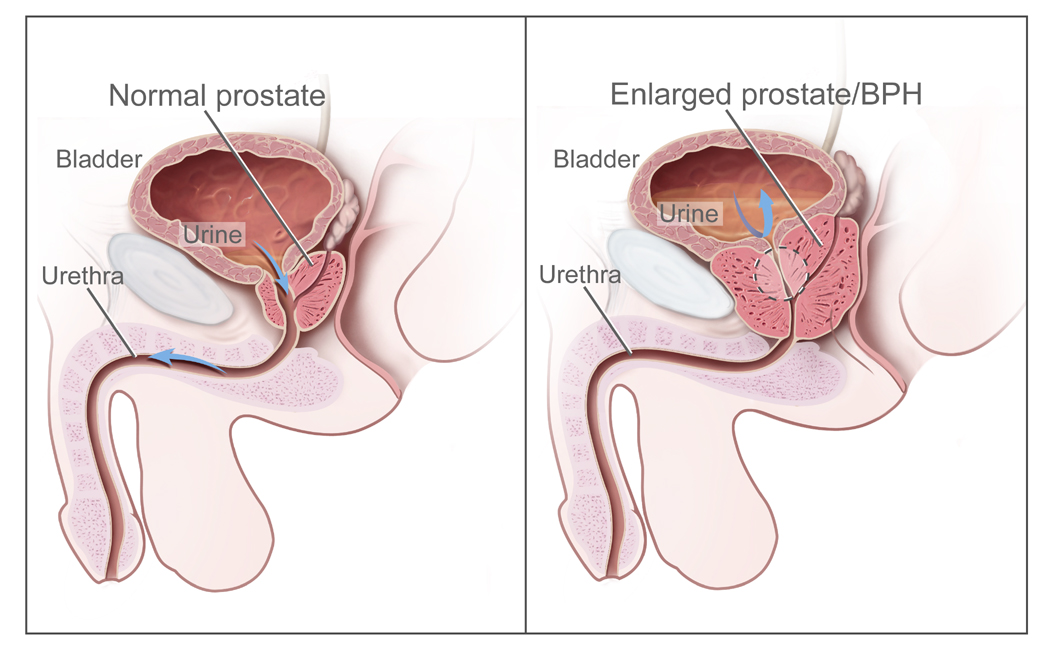
Enlarged Prostate/BPH

Causes of BPH:

The exact cause of BPH is not known, but it is believed to be related to hormonal changes that occur as men age. As men age, their levels of testosterone decrease, and their levels of estrogen increase, which can cause the prostate gland to grow.

Symptoms of BPH:

The symptoms of BPH can vary from mild to severe and can include:

  • Difficulty starting urination
  • Weak urine flow
  • Dribbling at the end of urination
  • Frequent urination, especially at night
  • Urgency to urinate
  • Inability to completely empty the bladder

Diagnosis of BPH:

If you are experiencing any of the symptoms of BPH, it's important to see a doctor. The doctor will perform a physical exam, including a digital rectal exam, and may also order other tests, such as a urine flow test or a prostate-specific antigen (PSA) blood test, to rule out other conditions.

Treatment options for BPH:

The treatment options for BPH depend on the severity of your symptoms. For mild symptoms, your doctor may recommend watchful waiting and making lifestyle changes, such as limiting fluids before bedtime and avoiding caffeine and alcohol. For more severe symptoms, your doctor may prescribe medications, such as alpha-blockers or 5-alpha reductase inhibitors, to help relax the muscles in the prostate gland and reduce its size. In some cases, surgery may be necessary to remove part of the prostate gland.

Conclusion:

So there you have it, our overview of Benign Prostatic Hyperplasia. Remember, if you are experiencing any symptoms of BPH, it's important to see a doctor for a proper diagnosis and treatment plan. With the right treatment, you can manage your symptoms and improve your quality of life.

RIRS: A Minimally Invasive Procedure for kidney stone treatment

RIRS: Retrograde Intra Renal Surgery for kidney stone


RIRS or Retrograde Intrarenal Surgery is a minimally invasive surgical procedure used to treat kidney stones or other kidney-related problems. Unlike traditional surgery, RIRS does not require any incisions or cuts, making it a safe and effective option for patients.

The procedure is performed using a flexible ureteroscope, which is inserted into the urethra and navigated up to the kidney. The scope allows the surgeon to visualize the inside of the kidney and identify any stones or abnormalities.

Once the stones or other problems are identified, a laser is used to break them up into smaller pieces, which can then be easily passed through the urinary tract. In some cases, a small basket may be used to remove the broken-up pieces.

Flexible ureteroscope for RIRS


RIRS is typically performed under general anesthesia and takes between 30 minutes to 2 hours, depending on the complexity of the case. Patients usually go home the same day or the following day and can return to their normal activities within a few days.

RIRS is particularly useful for treating smaller stones (less than 2 cm) that are located in the lower pole of the kidney or in areas that are difficult to access with other surgical methods. It is also a good option for patients who are not good candidates for traditional surgery, such as those with bleeding disorders or other medical conditions.

Some potential risks and complications of RIRS include bleeding, infection, and damage to the ureter or kidney. However, these risks are relatively low, and most patients experience few or no complications.

Overall, RIRS is a safe and effective option for treating kidney stones and other kidney-related problems. It offers several advantages over traditional surgery, including a shorter recovery time, fewer complications, and less pain and discomfort for the patient. If you are experiencing kidney-related problems, talk to your doctor about whether RIRS may be a good option for you.

How to prevent kidney stones? | Askurdoctor.net


How to prevent kidney stones? | Askurdoctor.net

Preventing kidney stones can involve several lifestyle changes and dietary modifications. 
Here are some general tips that may help reduce the risk of developing renal stones:

1. Stay hydrated: 

Drink an adequate amount of water throughout the day to maintain good urine flow. This can help prevent the concentration of minerals that form kidney stones. Aim to drink enough fluids to produce at least 2 liters (about 8 cups) of urine per day.

2. Follow a balanced diet: 

Consume a well-balanced diet that includes a variety of fruits, vegetables, and whole grains. Avoid excessive intake of processed foods, high-sodium foods, and foods high in oxalate, such as spinach, rhubarb, beets, and chocolate.

3. Limit animal protein: 

High intake of animal protein, including red meat, poultry, and seafood, may increase the risk of kidney stone formation. Moderate your consumption and consider plant-based protein sources as alternatives.

4. Control salt intake: 

Limit your salt (sodium) intake to help prevent the formation of certain types of kidney stones. Avoid adding extra salt to your meals, and be cautious of processed foods that are often high in sodium.

5. Monitor calcium intake: 

While it may seem counterintuitive, consuming adequate amounts of calcium can actually help prevent certain types of kidney stones. However, it is essential to get calcium from food sources rather than supplements. Talk to a healthcare professional for guidance on your specific calcium needs.

6. Limit oxalate-rich foods: 

If you have a history of calcium oxalate stones, it may be beneficial to reduce your intake of oxalate-rich foods, such as spinach, rhubarb, beets, nuts, and chocolate. However, it's important to maintain a balanced diet and not eliminate these foods completely unless specifically advised by a healthcare professional.

7. Maintain a healthy weight: 

Obesity and weight gain are associated with an increased risk of kidney stones. Aim to maintain a healthy weight through regular physical activity and a balanced diet.

8. Avoid dehydration during exercise: 

If you engage in intense exercise or live in a hot climate, make sure to drink plenty of fluids to prevent dehydration and maintain adequate urine production.

9. Consult a healthcare professional: 

If you have a history of kidney stones or are at a higher risk due to certain conditions, medications, or family history, it is advisable to consult a healthcare professional. They can provide personalized guidance and recommendations based on your specific situation.

Remember, these are general preventive measures, and it is always important to consult with a healthcare professional for personalized advice based on your medical history and individual needs.

Kidney Stones - How Diet Can Help?


Kidney stones are caused when certain minerals of your urine are retained and not wholly released, causing them to amalgamate and form a stone. Passing kidney stones is one of the most painful experiences you may face physically. Its magnanimity is often compared to childbirth, and those who are suffering from kidney stones dread having this experience. If you are yet not affected by kidney stones and do not want to, read to know what dietary changes you can undergo to prevent it. 1. Drink a lot of water On average, a person must be drinking at least 3 litres of water every day. If you live in a more hot and humid climatic area, your water intake must be even more than that, so that on an average, 2.5 litres of urine is passed throughout the day, which decreases the chances of unnecessary retention of minerals from the urine and releases them more easily from the body. 2. Continue eating calcium-containing foods It is a common misconception that calcium accelerates the formation of kidney stones.


Calcium is digested in the intestine. Only the calcium which is excess and cannot be digested in the intestines are sent to the kidneys. Continue consuming calcium-rich foods unless your doctor prescribes you against it. Make sure your diet includes enough dairy products such as milk, cheeses, etc, or other calcium-rich foods like oats and broccoli.


3. Limit intake of oxalic acid Oxalic acid is mostly found in food obtained from plants. It restricts the absorption of calcium in the intestines and as a result, more calcium is passed into the kidneys; thus forming calcium oxalate or oxalate stones. Try to avoid foods like spinach, beets, nuts, tea, sweet potatoes, etc; mainly leguminous plant products.


4. Decrease the ingestion of sodium salts, sugar and meat protein Salts and sugars, mainly found in packaged foods to prevent them from expiring, increase the release of calcium and oxalates into the blood, which thus increases the chances to develop kidney stones. Meat contains fibres which affect certain nutrients in the kidney, thus aggravating the formation of stones. 5. Increase the consumption of insoluble fibres Insoluble fibres are those rough fibres which are not soluble in water during the process of digestion. They are found in rice, wheat, barley, etc, and are found to decrease calcium absorption in the kidney. They attach themselves to the calcium and oxalates, which enable them to be released as stool instead of urine. Other foods to avoid: Coffee Dark Chocolate Too many nuts